Saturday, April 1, 2017

A Day in the Pisgah NF

A Day in the Pisgah National Forest
3/25/2017

 I followed my youngest son along a narrow trail down the mountain side over roots and between mountain laurel. somewhere down at the bottom I knew there was a stream just wasn't sure how long it was going to take us to get there. I suppose, like me, my sons take the path least followed when searching for trout.
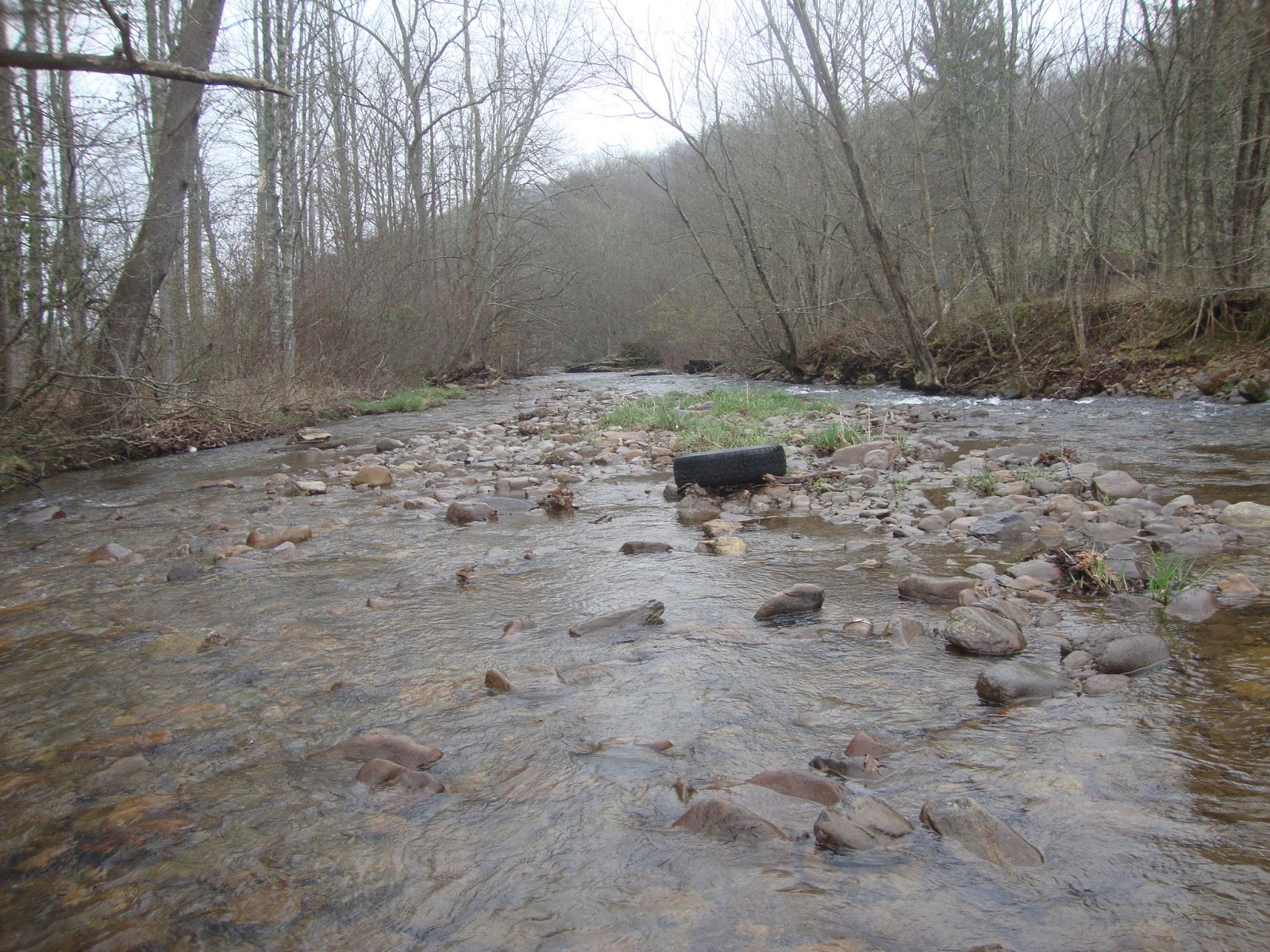
 Standing at the bank the water ran clear and lower than normal according to my son. Woolly Buggers were the main 'getter' as both my sons will claim. Jesse Pete headed upstream and I headed down casting the Olive Bugger in straight runs and deeper pools I came across. The terrain along the stream was tricky wading with an outcropping of flat slanted boulders beneath the surface as well as waterlogged mossy logs. Tops of bigger round boulders shown above the surface water which usually was a sign of  a good deeper riffle behind. It was all manageable with a glance in the water to which direction I was headed.
 With the gray sky above made for good shadows along the banks and no glare when looking downstream. The laurel and small branches along most of the banks weren't in any way made for long rods. With my 3wt 7' Hardy Demon I was able to make short wrist casts and fine roll casts with the DT line I was using. With the clear water I tried to make long casts, where possible, which usually were made with me standing so my right casting hand was near the middle of the stream. The morning wasn't gong too good as far as hook ups go. I felt bumps and a few hard grabs sparingly but couldn't get a good hook set. I figure a few of the lighter bumps were from the many native rainbows that inhabit the stream but I'm sure a couple of the harder bumps were good size stocked trout in the delayed harvest water we were fishing. Around noon my son found me and asked how it was going. I think by then I had only caught one nice size trout. He said he caught a couple and was going to head upstream a little further. I told him I'll head up and maybe catch up with him.

 There were three trout I spied, from behind them, in the back end of a long flat pool of water. I tried to get them interested by flinging the bugger over some twigs that protruded above the water. I wasn't sure how I'd get any of them to me should I catch one but it was worth a try. I didn't have to worry about landing any cause they just let the bugger pass by them. Looking upstream it looked as though there was enough open area to make a long cast towards them without being noticed. I waded out of the water and took a path upstream to an opening   
  Way upstream from the trout I found a downed log that rested on a flat rock which was suitable to sit on. Right in front of me water gushed over and between boulders feeding a deep hole and calming down in the long tail out. ¾ across the stream an exposed boulder split the flow and a run of wavy water flowed toward the far ledge under overhanging laurel branches. Behind the split the bottom of the deep pool was visible; I didn’t see any trout below. 
 To make my casts downstream I stood along the bank. With my right hand I made a back cast lengthwise above the stream flow to keep from getting caught on any branches or laurel along the bank sides. With a little extra force, on the forward cast, the fly line shot over the water and the bugger fell downstream a distance away. I stripped the bugger in with short strips hoping for a strike. Each cast I made further downstream but didn’t get a strike no matter what action I put stripping the bugger back towards me. I sat down and took a swig of water. While taking a break I noticed there were a few sipping risers within casting distance near a downed limb down and across the water. There appeared to be little BWO’s, about the size #20 to #18, flying around in spurts. Hmmm!!
 I clipped off the bugger and knotted on a #18 BWO with a CDC wing to a 6x tippet. With a wrist cast I had the BWO drift along a seam towards the last rise I seen. I had slack in the line for a drag free drift so I knew I had to be quick with a hook set. A trout slapped at the BWO but my reactions were slow and I missed the take. A few casts later and quicker reaction, I caught a couple of the small native rainbows.


  Looking more intently in the water I noticed a trout hanging out at the end of the wavy water under the laurel across stream. I changed dry flies often trying to get him to rise. Occasionally I would cast downstream and try to coax another native to strike.
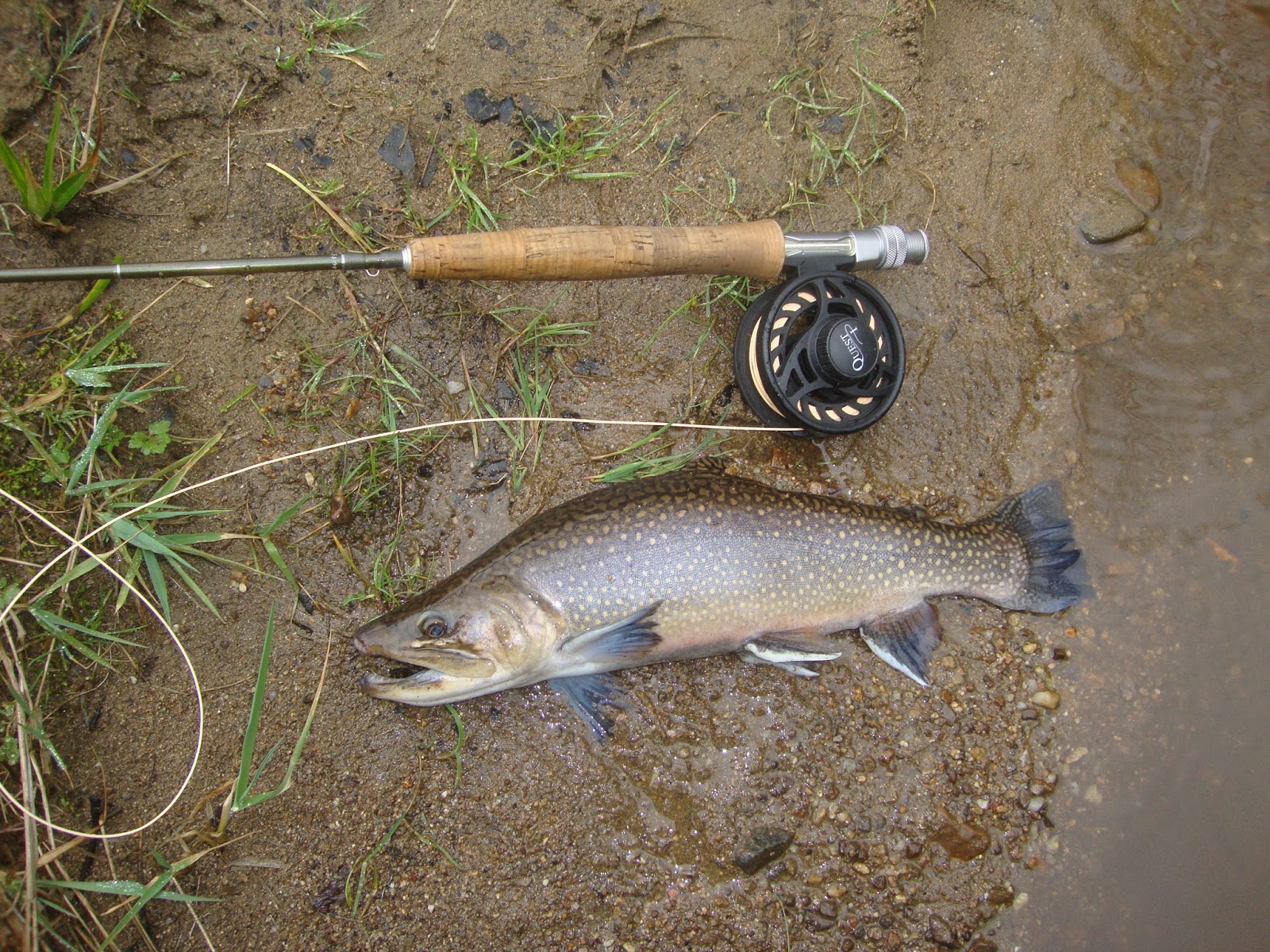
 I knotted on a smaller BWO parachute dry and proceeded in trying to convince the stationary trout to commit. On one cast I watched the #20 BWO crease the inside seam of the far wavy water. It circled over the large pocket of deep water, in an eddy, behind the boulder that split the main flow of water. I kept the rod tip high as I sat on the downed log. The BWO neared the boulder and than turned and drifted back over the deep pocket heading towards the out flow. I seen a turning flash of a big fish below and watched it rise to the BWO. As soon as his round nosed mouth sipped in the BWO I raised the rod as I stood for the hook set. The fish somersaulted, just below the surface, with the hook up and turned deep into the pocket of deep water. The 3wt rod bowed instantly as my heart raced with excitement. After the slack line slipped through my fingers the trout took line off the spool as it headed downstream in the more open water. I felt a couple head shakes with the line and into the cork handle that I gripped tightly. Water churned downstream where the trout decided to take the skirmish. The tugs on the line were forceful and the 7’ rod flexed with each jolting tug. The trout used the open water downstream to swim from one side of the stream to the other trying to free itself. I was nervous wondering if the small #20 hook was going to hold up through the vigorous battle. I had little control on which way the trout wanted to go with the undersized rod so all I could do was hold on and try to maintain good tension and rod position until the trout tires some.
 I knew I couldn’t bring him up the wavy fast current in front of me so I let up on the rod pressure and stepped over the log onto the sandy bank. Once in position I added a little more force on the rod as it arced down towards the hooked trout. It felt like long minutes went by before he decided to start swimming his way upstream with the rod pressure. He kept his distance near the far bank and I had to get the rod level with the surface water when he headed under the laurel. I had the rod handle facing upstream with the rod tip facing toward the far bank. My grip was white knuckle tight. He paused for a moment under the laurel and than took deep into the pocket with a sharp head shake. I brought the rod up though the tip pointed downward. When the fish rose to the surface I was afraid it was going to go skyward and I’d lose him. Instead he came to the surface and looked over at me as to say “You Bastard”, shook his snout at me and turned deep again. I tightened my teeth and lips around the stogie I held tight in my mouth and showed no fear at that particular moment.
 I wasn’t sure what he was up to but he was tugging at the line like a scuba diver does on a guide line when trouble arises. It felt like he was circling in the deep pool but I noticed ever so slightly he was rising. I gave a little pull with the rod downstream and I felt him turn from beneath and start to head across from me. When I put the net in the water he gave a wrenching head shake and line tension slipped through my pinching finger against the cork handle. He wasn’t ready to concede the battle yet and as long as my hook set held up I was pretty sure I’d get him in safely.
 I was knelt down with my wrist locked in the upward position trying to keep the rod handle skyward. The rod curved out towards the trout. The longer I kept my position the closer the trout came to the net. He was finally ready to accept his misfortune and came calmly to the net. I had to get him to the bank quickly for fear he would flip out as his body was long for the tear drop net.

  Though my sons told me there were some large trout in this mountain stream I wouldn’t have believed how big they were talking about. After a quick picture I placed him in the water with his snout facing up stream into the slight current along the bank. When he gave me a good forceful tail swat I let him free and he swam back into the stream.
 The butt of my stogie was coming apart and was soft from moisture holding it tight during the battle. I took the time to cut off the soft butt and relit the stogie. I tried to get another fishes attention but I think the long battle scared any other trout in the area watching. I walked up the bank to the trail and headed to look for my son.
 On the way upstream I spotted a couple of promising looking trout locations and dabbled a bit with an offering.

 Meeting up with my son he told me he found a long deep pool with plenty of trout in it. He said he did great fooling trout and hooking up with many on a couple of different color buggers. I followed him upstream to the location he was talking about. There were three guys standing on the bank below talking and fishing the same long pool Jesse had told me about. From up on the bank I could see a few trout lingering along a long tree trunk submerged in the water. I looked for a safe place to get down the bank and proceeded towards the water.
 I saw a rise down in the tail out, in the shallower water across stream. After a few casts of the dry fly, with no takers, I gave up. My son, who was watching me, said he was going to head back home. I told him I’d meet up with him tomorrow.
 He had helped me set up camp for the night, on the way in, along the dirt forest road. I planned on fishing till I got tired and retire for the night at the camping spot. I figured on fishing till noon the next day and then clean up camp, weather permitting.

 I clipped off the dry fly and decided to fish a bugger down stream till I decided to quit. I lit my last stogie for the time being. The going was tough on the stony bottom, narrow passages between laurel and brush. There were times I came across semi deep pools and good flowing riffled. Now and then I’d hook into a trout or lose one.

  Back at camp it was time to relax. I changed clothes and ate a sub sandwich which I bought on the way over. I quenched my thirst with a beer from Hi-Wire Brewers from Asheville.

 After getting everything settled I took out a bottle of bourbon and a Maduro Leaf cigar by Oscar. Sipping the bourbon while puffing on the Maduro was enjoyable by a small campfire.

 The night was cool and calm. Listening to the small creek near by put me to sleep in a tranquil state of mind.
 
 About an hour before daylight I heard drops of rain falling upon the tent. For a few minutes it poured down a little harder soaking the tent and camp stuff I had out. Daybreak it was still raining but not all so hard. I decided not too fish the morning and started to break camp in the drizzling rain. It wasn’t that I don’t fish in the rain but the next week I’ll have a few more days to fish. Besides, I already caught the biggest fish in the stream so there was no reason to be greedy and catch the second biggest! lol!

~doubletaper

Friday, March 31, 2017

Back Country Trout NC


Back Country Trout
North Carolina 3/30/2017

 I decided to hit one more trout creek before heading back to PA. There is a creek about 5 miles north of Lansing North Carolina that is a Delayed Harvest area. Before parking I drove up the road a bit to check out the creek. It meandered through branchy trees and rock formations. It looked like a quiet brook stream, narrow with lots of shallow riffles. I found a place to park along the road and gathered my stuff.
 It was a misty overcast gray sky morning. I wasn’t sure if it was going to pour down rain so I decided to leave my camera in the truck. The odds of catching a monster trout in such a small creek looked slim anyway. I fitted the ferrules of the 7’ 3wt Hardy Demon and attached the reel with DT3F line. I Figured I only needed hip waders and put on my fishing rain jacket. Being I was only going to fish till noon I only took 2 stogies with me. I also took my water bottle and a net just in case.
 On the water I looked down creek. There were nice deeper wavy runs along the bank. The water was pretty much low and crystal clear with darker pocket waters. Leaning trees and bare branches stretched overhead so I was glad I took the 7’ Hardy. By the looks of the empty bait containers along the banks I wasn’t sure I was going to catch any trout but maybe there were a few trout to be had.
 I knotted on a Woolly Bugger and pulled out a lot of line to make long casts along the banks hoping to draw trout out of their bank side hide outs into midstream as I fish downstream. I missed two strikes within the first 10 minutes. I brought my bugger back just to check to make sure there was still a point on the bend. After honing the point I returned to swinging and stripping the bugger as I slowly waded the creek.
 Midstream there was a good current flow that waved over rocks and emptied into what looked like a short length deeper pool. I made a cast down and towards the far bank and let the bugger swing into the deeper pool. I felt a sharp tap and strip set the hook. The 7’ rod arced down creek when I brought it to my side and my first hooked fish was tugging at my tight line. I forced him into the shallower water to my right and he splashed the surface water all the way to the net. I was a little surprised to see it was a rainbow. Not too big but it was my first trout in this creek for me.
 After 6 to 7 more swings in the pool accounted for 1 missed tap. I had a feeling there were more fish in the pool being it was surrounded by shallower water. Keeping a low profile I snuck to the right side bank and contemplated my next offering.
 Having caught a few trout the past few days in the Big Horse Creek on a cheese color sucker spawn I decided to drift one through the knee deep pool. I clipped off the bugger and when I went to tie it on I already had a BH Hares Ear attached to tippet as a dropper. The weighted nymph was a good idea to keep the unweighted spawn along the bottom in the feeding zone without any additional weight. It wasn’t easy to make a roll cast with a short rod from a stooped position but with a little extra oomph I managed to get my imitations up into the riffles. Holding the rod tip high I watched the fly line as my imitations drifted through the pool of water. Almost at the end of the drag free drift my fly line dipped down so I lifted the rod up and back with hook setting force. The line tightened and the rod instantly flexed deep with a hooked thwarting fish on the other end. This was no small trout. I stood up and held the grip tightly as the fish struggled against the arcing rod pulling line out of the tensioned spool. The fish darted up on the far side of the wavy current through the shin deep water. I kept my wrist locked as the rod tip pointed towards and following the large trout. In the clear shallow water I could see I had a big fish for such a small creek. He turned into the wavy current and followed the current down into the pool where I hooked him. I took in line and kept tension with the arced rod. In the deep pool he struggled with thwarting body language. The sucker spawn was now swaying with the straight line above the surface water. The trout had taken the Hares Ear as it was sliding along the creek bed. I struggled a bit more with him but every time I got him nearer he thwarted viciously and I had to give him line for fear of losing him.
 It got to be nerve racking with the light short rod fighting the big fish. I began to feel him tiring with less aggressive fighting. It was now his weight and the force of the current versus my rod pressure and my wit! I swear the rod was curved only inches from the cork handle when I finally netted the trout. It slapped in the net a few times before I attempted to unleash him from the hook. Upon the release he sat in the ankle deep water, as if to catch his breath, before darting back into the pool of water with a forceful tail swat.
 I looked up into the gray sky. The morning drizzle rain was now more of a light mist. I decided to walk back to the truck for my camera. You never know?
After getting the camera and lighting up a stogie I began fishing again where I left off. I clipped off the tandem rig and retied on the Woolly Bugger. Now that I knew there were deeper pockets than I thought I added a little weight about a foot up from my bugger.

 In the shallow riffles I kept the rod tip high enough not to let the added weight wedge between any bedrock. In deeper sections I kept the rod level or slightly towards the water surface depending upon the swing and depth of the water.
 I stuck with the bugger as I slowly waded and fished downstream. Occasionally I’d stop and observe the backwoods and surrounding.

 At times I had to climb over boulders to get a better position to cast the bugger in good looking locations. Other times I climbed over boulders just to make my way downstream. There were times I caught a branch or two I wasn’t aware of. I always made an extra effort to retrieve it from miscalculations or not observing my clearance when roll casting.
Wham, a trout tags the bugger on the swing!


 Wham, a nice brook trout slams the bugger as I twitched it in a slower current pool and puts up a good struggling fight against faster current.

 Wham, a rainbow swipes and gets hooked as I strip the bugger towards me.

  There’s a good deep current flow along the far bank feeding a large pool of water, as well as the slower main flow, entering very deep water under a rickety old wooden bridge. I catch two hearty rainbows in the deep wavy current along the bank.

 I try and try again to hook a trout in the deeper water but fail to get any action. I know there has to be fish in there. I try adding more weight to the leader but still no strikes. I give up, wade out to the bank and follow the path that crosses over a dirt road that leads to the bridge.
 On the down side of the bridge I walk along the bank a few yards from the bridge. I peer into the water beneath but it is too dark and deep to see the bottom. Just for the heck of it I took off the extra weight from the leader. I make a backhand sidearm cast under the bridge and strip the bugger back towards me in the oncoming current. On my second attempt I felt a little more weight might get my bugger down deeper sooner before being swept by the current. With the added weight I was able to get the bugger further up creek under the bridge. As I was slowly taking in line I saw the slack in the fly line loop downward. With a long pulling strip of the line and yanking the rod upward the line tightened. I saw a flash within the deep water. The trout darted to the far side of the bridge block wall as I let the fly line slip through my pinched fingers with tension. The trout did a quick u-turn, down than up creek and dipped deeper. I knew the trout couldn’t go very far upstream past the bridge caused of the boulders so I let him tug the flexed rod not giving him much line. After his failed attempts of freeing himself he turned down creek. When he passed before me is when I realized this trout was bigger than what I originally thought. His long body flashed in front of me on his way by. He was now struggling down creek from me churning up the shin deep water. Quick head shakes and short darts didn’t set him free. The Demon rod flexed deep with each jolt while my line hand controlled the line tension. I took a few steps down along the bank and stepped into the water. With the movement he swam to the far bank remaining down creek from me. Again, with the short rod and now with current flowing against him, getting him towards me wasn’t going to be easy. With him struggling a few yards across from me I stretched my arm out holding the wooden net handle tightly. With the rod high and practically behind my head I had the trout coming nearer. Struggling but inching closer I scooped his body into the net.
 With a kype jaw and hunched back I had a feeling he’s been in the creek for awhile. 

 Down creek I found a deep flow where the current would sweep my bugger under a wedged log with the right drift. The log, I guess, was about 2 feet above the creek bed with a foot or so of water flowing over the log. There was no way to master the flow with every cast but when my bugger flowed beneath the log I was almost guaranteed a strike most of the time. I think I hooked about a half dozen times in this one section.

 Looking downstream there was so much more trout holding water but I knew I must be going. I got back to the truck around 1:00. I had about a 7 ½ hour drive ahead of me. I wasn’t sure how far I was from the interstate but I had a feeling I’d have a lot of twisting winding roads to get there.
 Well, the biggest fish didn’t get away but I just didn’t have my camera with me to capture the moment. I’m sure glad I brought my net along.

 On the drive home I thought about my past week or so. I got to visit with a friend in Kentucky and my two boys and their family in Asheville NC. I fished 5 different waters from a small mountain creek to a wide open river for trout. In all of the five trout waters I caught at least one and some times two big trout.
I took out the Arturo Fuente Double Chateau sun grown and lit it up. The smooth tasty tobacco was a great way to top off a good vacation.


~doubletaper
 

Friday, March 10, 2017

Rainbow Run Trout Club

Rainbow Run Trout Club!


 After trying to fish the tumbling, gushing, falling water next to the camp I knew things looked grim for the last full day at camp. The warm weather the past few days melted the snow on the mountain tops and the run off was more than the creeks and streams could handle to make anything fishable. I walked into camp wondering what the plans were for the day. The other three were just finishing up breakfast and talking about some ideas. I took my warm plate of eggs, potatoes and venison sausage patties out of the warm oven and listened in.
 The discussion was ‘what are our options?” The water run off made stream fishing out of the question. We fished Spring Creek the day before with little success and wasn’t willing to travel 2 hours not knowing the conditions of any other trout streams. We came to the conclusion lake fishing was our last resort. Of course there were comical endless remarks why four grown men with years of trout fishing experience are deciding to go to a pay lake to fish for trout. This was something all of us frowned upon and never attempted because of public humiliation.

 Being one of the founding fathers of this club I was selected to write a brief history of how it came to be. The other three founding members requested to be anonymous therefore their names have been changed to protect their sanity.
 Before we even stepped out the door of the camp we were coming up with reasons to ease our guilt as to why we must pay-to-fish in a stocked trout lake.
1. There was no where else to fish because of conditions!
2. There are plenty of fishermen that pay to join a fishing club so they can fish over stocked trout on club property.
3. There’s many famous fly guys who pay big bucks to fish private waters where as we will be paying less than $10.00 an hour.
4. We figured people pay for a Lake Erie stamp to fish stocked steelhead waters so what’s wrong with paying to fish for farm raised trout right on the premises.

Other things were discussed to try not to make it look like we were so desperate.
1. We thought about finding a 10 year old kid to take with us.
2. Maybe if there was a handicap parking space and dock we would have one of us get out of the vehicle limping with a cane and coughing heavily.
3. We thought about covering our face with a handkerchief like KJH so we weren’t identified but we figured they might think we were going to rob the place.

After going the wrong way on Rte.6 we stopped at Sheetz in Coudersport. I got directions from a local truck driver but Basil Hayden failed to find a mother willing to give up her kid so we can take him fishing.

We pulled in under the welcome sign and drove up the gravel lane. There were already a few camo clad fly guys whipping their fly sticks like buggy whips on the upper lake.
 In the parking area Basil Hayden and Labatt covered their heads with their hoodies and pulled the strings tight so their faces weren’t openly exposed. I put on my sunglasses, camo coat and camo hat to ’fit in’ with the other guests up on the lake. On the other hand WW was wearing his high class expensive fishing gear complete with a trout net hanging from his back. With his polarized lenses on he looked like an ad model right out of a fly fishing mag. Labatt and I walked into the building entrance to find out how this pay-to-fish works. We were instructed to which ponds we could fly fish on, what the laws of releasing were and fishing rates. We conveyed this to the other two.
 In the parking lot we got our wading gear on, vests and strung up our rods. We reentered the building and signed a name on the registration form, punched a time card and picked a number. On the way back through the lot we grabbed our rods and headed up to the lake. WW, Labatt and Basil were taking two rods each as if they were going to a driving range with new irons. So there we were, two hooded gangsta lookin bros’ and I, looking like a homeless soup kitchen guy down on his luck, following a prestigious guide doing community service. Oh ya, we’re carrying custom built and $300.00+ factory rods with $250.00+ reels.
 WW and Basil walked passed the other guests and headed to the far side of the pond, looking lake, for better back-casting freedom. I looked the pond over and took to the side that looked less likely to be fished. With a row of tall pines only a few yards away from the pond I knew this would be a problem for new or amateur fly rod casters.

 I stepped a few feet into the water and on my second cast my bugger took a strike so hard it broke my fresh 4x tapered leader. I tied on another bugger and was more careful with my line hand tension while stripping the bugger in. I think I was on my second or third hook up when Labatt finally got his leader tied on and got his first cast in. After my second break off on another hard hit I trimmed off about a foot of the tippet section and retied another bugger on. This bugger lasted me through many a caught fish without breaking until one of my back-casts hit the metal roof on a picnic shelter.
 With my 4th or 5th hook up on the energetic 14” to 18” rainbows WW was walking towards my side of the pond. It wasn’t soon after Basil followed along. Even Labatt started to move closer to me. I started to feel as if I was being intruded upon like steelhead fishing in Erie. It wasn’t long after that before the four of us were lined up along the bank as if fishing the ’Log Jam!’
 I’m sure it didn’t take to much time for the other paying guests to see we were well educated fly fishermen. Watching our long roll casts, smooth casting strokes as well as nice shooting loops we weren’t the bums as our clothes may have depicted.
 In time we were doing the Walnut shuffle jockeying for better position. Basil was putting on a show with long circular roll cast loops off his long rod. WW was catching a few also resorting to dropping an egg pattern or streamer under an indicator. He just couldn’t resist, even in the still pond water. I was continuing to pull a trout out now and than while it seemed every time I looked over to Labatt he was tying on another fly pattern or more tippet.
 As far as the trout go the rainbows fought with good energy considering the cold conditions. A few would break the surface water with short leaps trying to shake off the barbless hooks. I’m talking about 14” to 20” bows!! Brian caught the first good size tiger trout and had a huge brook trout on but failed to net him. Basil mostly caught browns on his side of our line up. Later on Labatt got into a good school of bows. Some of the fish caught were well girthed 20” to 23” fish.
 All the while we were fishing, groups of other fisher people would come and go to try their luck. They watched us as we fished with confidence. Hooked fish splashed about, lines flew upwards with false hook ups or quick releases. Rods flexed with the fighting on the other end by the weighty fish. We were as happy as 21 year olds at their first keg party but we felt like 21 year olds at a house of ill repute. There wasn’t much of a challenge but the rewards were significantly satisfying. Yes, we were remorseful with this outing we were partaking in, hiding our true sadness of not being able to fish a local trout stream.
 Basil gave up after 2 hours with back pain. He headed to the vehicles with his two fly rods and returned with a cup of hot coffee. It wasn’t much longer when Labatt was feeling back aches and also checked out to relax with Basil. After shortly joining WW fishing the lower lake I clocked out at $25.25 worth.

 In a group there’s always a guy who just can’t get enough. By himself, last person on either pond, WW found a current flow from an underground pipe discharging water from the trout rearing ponds. Being from Erie he couldn’t resist dropping an egg pattern under an indicator drifting it through the current flow of the discharging water. He was producing hook up after hook up like an early run of steelhead. I suppose seeing us in the parking lot enjoying a beer he finally gave up and called it quits.

 Even with pictures, which I had to vow not to show faces, I can’t even prove they accompanied me. You see, when we were supposed to write our names on the registration form they did not. The office manager commented to me, as I was clocking out, that my friends had some strange names.
“Ya,” I questioned, “like what?”
They wrote their names as Jerry, doubletaper and DT!!!

So that’s how the ‘Rainbow Run Trout Club’ came about on 3/19/11.


___________~doubletaper

Friday, March 3, 2017

San Juan Bi-color Worm

Beaded San Juan Bi-color Worm


 After fishing the Bi-color San Juan worm in the Big Horn River a few years ago with great success on the wild brown trout I brought it home and started tying the bi-color worm. I added a bead to some ties to get the pattern down quicker in fast water. Both with and without the bead have been catching fish ever since.
 Here’s the way I tie my pattern and have no reason to ever change it except for adding different colors on occasion.

The Bi-Color Beaded San Juan
Hook; #10 or #12 3x long curved.  J. Stockard JS 720H
Thread; Red
Bead; brass, gold or copper
Back body; Red Ultra Chenille standard
Front body; Wine Ultra Chenille standard
Mouth and anus; Burnt ends of chenille

 1. Place bead on hook and leave behind eye of hook

 2. Thread base hook shank from behind bead to bend of hook. 

 3. Measure red Chenille so the front end will be a good distance behind eye of hook leaving room for front of body.
Tie down at bend and bring thread about ¼ distance behind eye of hook.

 4. I add a layer of glue along the top of the threaded shank. This keeps the chenille from rolling over.

5. Lay the chenille on the shank, tie down as shown and cut thread.

 6. Push bead up against front of chenille. (You might want to add a bead of glue where you place the bead.)
Start a new thread base behind eye to bead and back behind eye. Keep a gap between thread and hook eye.

  7. Secure wine chenille behind eye with chenille, extending over bead, with thread wraps and bring thread back behind eye as shown.

 8. Fold chenille forward, over itself, and tie down behind eye of hook. Trim ends of chenille to desired length.


 9. Take a flame and quickly burn the tips of the chenille. This will hold the chenille from unraveling and coming apart.

 Here are a couple other Bi-color San Juan worms I tie. 

 Where else to keep those worms but in a designated worm can.

~doubletaper


Saturday, February 25, 2017

Petroleum in the 50's

Petroleum in the 50’s
2/22/17

 My grandpa was wise when it came to hunting and fishing. He would tell me where’s there’s one rabbit there is another. Back then I didn’t understand why but he was right most of the times that I recall. I always figured this applied to trout also in big waters. 

 After fishing in central Pa. the past couple of days I did pretty well catching trout beneath the surface with nymphs. I was hoping for a BWO hatch and rising trout but it never came about. Wednesday, being it was suppose to be in the high 50’s, I was hoping for a hatch of either BWO or stoneflies with rising trout. I gathered up my gear and warm clothes and headed over to Petroleum Center area on Oil Creek.
 When I got there I seen the water was moving at a good clip but was wadable and at a good level as far as I was concerned. It was clear but the overcast sky kept the deeper holes opaque. With the winter snow runoff I figured the water would be quite cold so I wore my neoprene chest waders for warmth as well as knowing I would most likely get into some deeper water if I wanted to fish towards the far banks.
 I must have spent a couple of hour’s nymph fishing the section of water I chose at first. I covered the area that I could reach, pretty thoroughly and never got a strike. I didn’t even feel anything that even felt like it could have been a strike. I used different nymphs, San Juan‘s, and even tried a bugger now and then. I used an indicator at times and sometimes not. I added more weight to get my imitations down but it didn’t matter I couldn’t get a fish to bite. I knew they were in there but I just didn’t have the right stuff or they weren’t around.
 The second section I tried I came up with the same results. No strikes, no fish and a couple more lost nymphs due to underwater snags. I wasn’t discouraged in the least though. The air temperature turned out into the high 50’s and I was enjoying the quietness and a good cigar now and then. I’d get out of the cold water to give my feet and legs a beak from the chill but other than that I was fine. Sooner or later I had to catch a fish?

 The last section I was to try had been a good spot where trout held earlier in the year. It wasn’t a big wide area that they were holding in back during the low water days but I figured they might just still be hanging out there like a gang guarding their turf. With the higher water they may be spread out a bit more but I had a feeling they still might be hanging around. The problem was wading across the stream far enough to cast towards the far bank.
 I slowly and cautiously waded my way out through the water. Each step was thought out and I felt for slippery, or loose, rocks before resting my weight on my forward foot before taking another step. The water crept up my legs the closer I got to the middle of the creek and soon I started to feel the coldness of the water on my thighs through my waders. The current wasn’t making the going any easier. I found a safe place, with good footing, and decided to make a stand. I would have no problem reaching the far bank with my 9’ G2 Scott rod if necessary. 

  Though I wasn’t sure a trout will chase a Woolly Bugger in the cold water conditions in February but I figured if I swung one in the current I might get at least one to strike. I use a bugger as an attractor to find out where the fish hold especially for rainbow waters. There’s usually one bow that will hit a bugger if there is a gang of them around. Once I find the gang, and they quit hitting the bugger, then I’ll resort to nymphs.

 The bugger fell about 3 feet short of the far bank. As the bugger sank the rest of the line arced on the surface water and started to swing the bugger beneath. I kept my eye on the fly line for any sudden drop in the tip and held the fly line between my thumb and fingers in my left hand so I could feel any sudden tug. I saw the fly line dip and felt the light pull of the fly line as the arc narrowed on the surface. I quickly set the hook with a swift backhand of the fly rod keeping the fly line tight between my fingers. The line shot up from the water surface and tightened from the hooked fish. The trout pulled and tugged as it swam with the current near the far bank. As the rod shaft flexed deeper the trout swam and tugged in an arc down creek. Because of the swift current I kept the rod tip near the surface not wanting to bring the trout up into the swift surface water. I kept a tight grip on the cork as the fish played in the current and tired itself out. It decided to swim away towards the far bank again and because of the pressure of the trout and force of the current I let it have some line yet kept the reel drag tight enough to add that extra resistance of the wayward trout. Once I felt the trout didn’t have the fight in him, as when we started, I started to reel in bringing him towards me. Usually I will hand line him in but in water to my thighs and the strong current this would leave a lot of floating line in the water. There would be a good chance these erratic trout could get caught in the line when trying to net it or playing him out near me. Close enough, down stream, I took my net out and drew him closer moving the rod upstream. A last little splashing about, after exhausting any of his exuberant energy, I was able to cradle him in my net.

 I continued swinging the bugger and managed a couple more trout before the action ceased.

  Being that black stoneflies and Blue Wing Olives are the first hatches here in PA. I decided to nymph fish a lil black stonefly. For some reason I found a Picket Pin with a stonefly dropper works well together. With a little extra split shot on the leader I was ready to go deep.
 With the indicator attached I didn’t feel my offerings were getting down deep enough. I tried big looping mends but I felt the indicator was moving faster on the surface and not keeping the nymphs near the bottom long enough. I took off the indicator and it took big continuous mends and proper rod positions to get a likeable drift beneath the swift current. Once I managed this, the strikes started to come again. Fighting the fat rainbows in the current flow to net wasn’t always successful. The ones I hooked into that took the wet fly, instead of the nymph, were more energetic with skyward acrobatic twists and turns even in the cold water conditions. 

  The rainbows were nice and fat and gave me some good battles. Things finally died down and the cold water upon my lower body was starting to be extremely uncomfortable. I tried wading down creek to cover a different section but the water was too deep and I didn’t feel comfortable wading the slippery bottom with the swift current. I cautiously turned and waded back towards the shoreline.

 Not wanting to quit just yet I decided to pitch and swing a Woolly Bugger while wading down creek, along the bank, in safer water. Occasionally I would nymph fish in certain areas but kept coming up empty. The sun never came out and there never was a hatch to speak of. I hooked the bugger in the hook keeper and headed to the truck. It was about 3 when I got to the truck. I was satisfied with my catch and decided to head home.
 The day didn’t turn out like I wanted but I caught some fatty rainbows that gave me some good battles. I didn’t fall in and didn’t lose too many flies so it did turn out to be a pleasant outing. Maybe I can luck out and get into a hatch soon with some good dry fly action.

~doubletaper


Tuesday, February 21, 2017

Quiet Waters

Quiet Waters
2/20/17

Far from road noise
Away from the sounds of construction vehicles
Absent from garden and lawn tractors
Distant from passing locomotives

Beyond the crowds that
are enjoying the warm February weather
Absent from local fishermen
I come to the remoteness of the forest

The small creek flows with the sound of gentle riffles
Birds rustle about the dry forest foliage
A lone leaf can be heard tipping bare branches
as if falls from an aged oak

The smell of forest pines
The coolness of the forest breeze
The presence of laurel
The calmness that is felt

The lightness of the 3 weight fly rod
I roll cast into the mountain stream
My hand tied nymph drifts within the dark waters
searching

The line hesitates
and with a swift but gentle set
the line tightens
The rod flexes with activity

A wild trout tugs and darts
A small brown comes to hand
Its beauty is unmatched
Its release is unharmed

A smile forms between my cheeks
Excitement flows through my veins
Confidence is assured
I search for another

 As the sun lowers, evening draws near
Shadows form beneath the bank side laurel
The coolness of the temperature becomes more noticeable
Another wild trout struggles at the end of the line

 The day comes to a close
The journey home begins
A fire cured stogie awaits
Memories of this day comes to ponder

~doubletaper